
Category: Understanding the tests

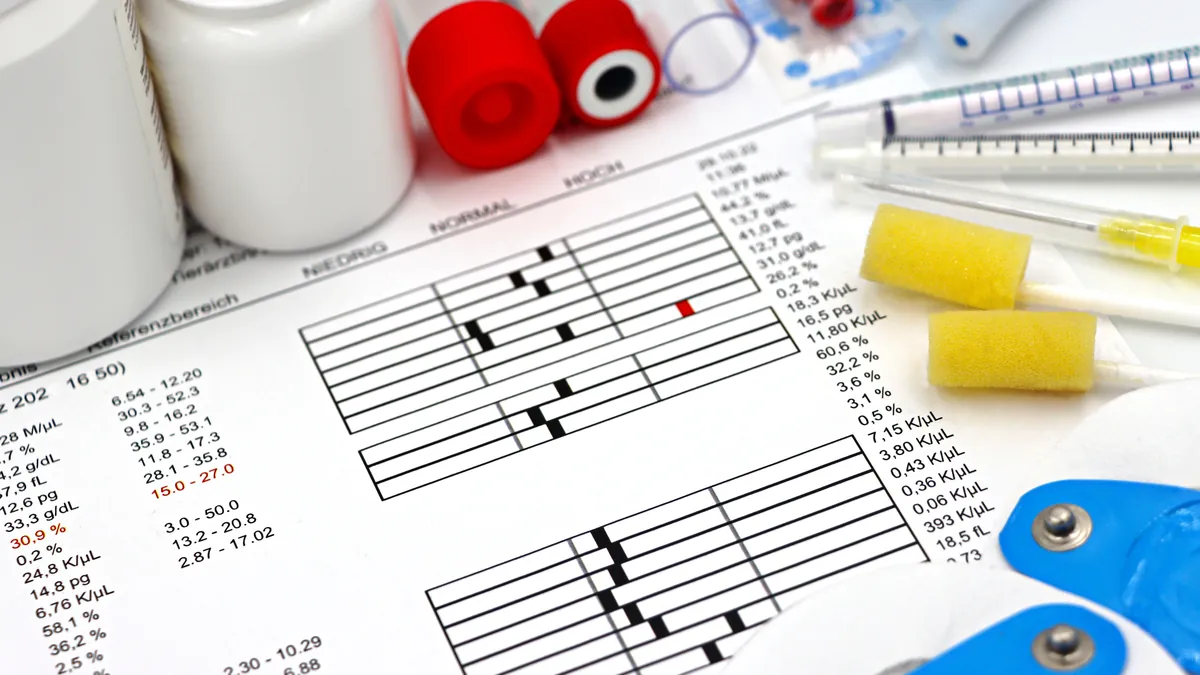
  • A printed lab report with reference ranges beside blood sample tubes

    What a Test Result Can and Cannot Tell You

    What a test result can and cannot tell you

    A test result can tell you that something is outside or within the expected range, that a pattern exists across measurements, and that something has changed since last time. It cannot tell you the cause, rule out disease on its own, or be read apart from the conditions it was taken under.

    Every measurement in this suite is a number about your physiology at one moment, under recorded conditions. That is more useful than it sounds, and less absolute than people assume.

    What can a test result tell you?

    • That something is measurably outside the expected range, which is a reason to look further.
    • That something is measurably within range, which is a genuinely useful baseline for every future measurement.
    • That a pattern exists across domains — reduced foot conductance plus a reduced toe index plus dry skin is a specific and actionable picture.
    • That something has changed since last time, which is the single most valuable output the suite produces.

    What can’t a test result tell you?

    It cannot tell you the cause

    An abnormal autonomic study is compatible with diabetes, kidney disease, thyroid failure, Parkinson’s disease, a medication side effect, deconditioning, or a bad week. The measurement narrows the question; it does not answer it.

    It cannot, on its own, be normal enough to exclude disease

    The clearest example is the ankle-brachial index. Calcified arteries resist compression, the cuff reads falsely high, and a limb with real disease produces a reassuring number. That is why the waveform and toe index are measured alongside it. Why a normal index can mislead.

    It cannot be read without the conditions it was taken under

    Sleep, alcohol, caffeine, nicotine, recent exercise, hydration, room temperature, time of day and every medication on your list shift these measurements. That is why the conditions are recorded as part of the result rather than as background to it.

    What is the most common mistake in reading a test result?

    Treating one borderline value as a diagnosis. A single low heart rate variability index after a poor night’s sleep and a cup of coffee is not autonomic neuropathy. The correct response is to repeat the measurement under controlled conditions before anything enters a problem list.

    The reverse error is almost as common: treating one normal value as an all-clear when the symptom is still there. A symptom that persists against a normal test is a reason to test something else, not a reason to stop believing the patient.

    Why is a second test more useful than the first?

    Almost everything here is more informative as a trend. A stiffness index that has not moved in two years carries information no first reading can. A resting energy expenditure measured before and after three months of a nutrition plan answers a question that no equation can. That is the argument for having a baseline while everything still looks fine.

    Frequently asked questions

    How do you read your test results?

    Read each result against the conditions it was taken under: sleep, alcohol, caffeine, nicotine, recent exercise, hydration, room temperature, time of day and your medications. Look for patterns across measurements instead of one number, and compare with your last result. A change since last time is the most valuable thing the testing produces.

    Does one borderline result mean you have a disease?

    No. One borderline value is not a diagnosis. A single low heart rate variability reading after a poor night’s sleep and a cup of coffee is not autonomic neuropathy. The right step is to repeat the measurement under controlled conditions before anything goes on your problem list.

    What if your test is normal but you still have symptoms?

    A symptom that persists against a normal test is a reason to test something else, not a reason to stop believing the patient. Some normal results can mislead: calcified arteries resist the cuff, so the ankle-brachial index can read falsely high. That is why the waveform and toe index are measured alongside it.


    Related reading

  • Video thumbnail for "Who Is Eligible for Measura Testing?" with Dr. Gurpreet Singh Padda, MD, MBA, MHP

    Who Should Have Cardiometabolic Testing

    Who Is Eligible for Measura Testing?

    Who should have cardiometabolic testing

    Cardiometabolic testing is for adults over 50 with any cardiovascular risk factor, everyone over 70, and anyone with high blood pressure, excess weight or a raised waist, a smoking history, or diabetes or prediabetes. Any one of these is enough.

    The criteria are broader than most people expect, and the reason is a number: in a general adult population, measurable abnormality is the rule rather than the exception.

    Why are the criteria for cardiometabolic testing so broad?

    Researchers analyzing the National Health and Nutrition Examination Survey for 2009 to 2016 defined optimal metabolic health as having all of the following without medication for any of them: waist circumference under 102 cm in men and 88 cm in women, fasting glucose under 100 mg/dL and hemoglobin A1c under 5.7%, blood pressure under 120 over 80, triglycerides under 150 mg/dL, and HDL cholesterol at or above 40 mg/dL in men and 50 mg/dL in women.

    By that definition, under 12.2% of American adults met it in 2009 to 2016, and under 7% do on the tighter criteria applied after 2021 — so more than nine in ten US adults do not. Fewer than one in three normal-weight adults met it. The figure fell to 8.0% among overweight adults and 0.5% among adults with obesity.

    In the Padda Institute patient population the picture is starker still: fewer than 3% of patients overall, and fewer than 1% of chronic pain patients, meet the same definition of metabolic health. Those are practice-reported figures from our own population, not trial outcomes, and individual results vary.

    A screening rule built on the assumption that abnormality is unusual will find it late. That is the whole argument for casting the net where this testing casts it.

    Who should get cardiometabolic testing?

    Any one of these is sufficient.

    CriterionWhy it is on the list
    Over 50 with any cardiovascular risk factorVascular and small-fiber change is common and silent in this group
    Over 70, regardless of risk factorsPeripheral artery disease and vestibular dysfunction both rise steeply with age
    High blood pressure, treated or notDamages small vessels and impairs autonomic blood pressure control simultaneously
    Overweight, or a raised waist measurement at any weightMetabolic health prevalence falls sharply with adiposity
    Current or former smokerThe strongest single association with peripheral artery disease
    Diabetes or prediabetesNerve and vessel injury begins while glucose still looks acceptable
    Population criteria for cardiometabolic and autonomic assessment.

    Why does age alone qualify you for testing?

    Age alone qualifying strikes some people as over-inclusive. Two figures explain it. Peripheral artery disease measured by ankle-brachial index rose from roughly 5% of adults in their late forties to roughly 18% by the late eighties in the wealthier countries surveyed. And 35.4% of US adults aged 40 and over had vestibular dysfunction detectable on a simple standing-balance test, with symptomatic individuals carrying twelve times the odds of falling.

    Neither is something a person notices happening to them. Both are measurable in an hour.

    Do you need symptoms to get cardiometabolic testing?

    You do not need symptoms to qualify. If any of these are present, the case for measuring rather than waiting is much stronger: burning or numbness in the feet, feet that have stopped sweating, cramping in the legs on walking, lightheadedness on standing, exercise intolerance out of proportion to fitness, or unsteadiness.

    Who does not need cardiometabolic testing?

    Healthy adults under 50 with no risk factors, where the yield does not justify it. Anyone in an acute presentation — chest pain, sudden weakness, a cold and painful limb — who needs an emergency department. And anyone for whom the result could not change what happens next.

    Frequently asked questions

    What are the five markers of metabolic health?

    Researchers using national survey data counted five: a waist under 102 cm for men and 88 cm for women, fasting glucose under 100 mg/dL with an A1c under 5.7%, blood pressure under 120 over 80, triglycerides under 150 mg/dL, and HDL cholesterol of at least 40 mg/dL in men and 50 mg/dL in women. All five have to be met without medication.

    Can you be metabolically unhealthy at a normal weight?

    Yes. In the national survey data behind these criteria, fewer than one in three normal-weight adults met every marker of metabolic health. Weight is only part of the picture, which is why a raised waist counts at any weight, and why high blood pressure, smoking, prediabetes or age can each qualify you for testing on their own.

    How many American adults are metabolically healthy?

    Very few. Under 12.2% of US adults met the full definition of metabolic health in the 2009 to 2016 survey years, and under 7% do on the tighter criteria applied after 2021. That means more than nine in ten adults miss at least one marker, which is why the testing criteria cast a wide net.

    References

    • Araújo J, Cai J, Stevens J. Prevalence of Optimal Metabolic Health in American Adults: National Health and Nutrition Examination Survey 2009–2016. Metabolic Syndrome and Related Disorders. 2019;17(1):46–52. doi:10.1089/met.2018.0105
    • Fowkes FGR, Rudan D, Rudan I, et al. Comparison of global estimates of prevalence and risk factors for peripheral artery disease in 2000 and 2010: a systematic review and analysis. Lancet. 2013;382(9901):1329–1340. doi:10.1016/S0140-6736(13)61249-0
    • Agrawal Y, Carey JP, Della Santina CC, Schubert MC, Minor LB. Disorders of balance and vestibular function in US adults: data from the National Health and Nutrition Examination Survey, 2001–2004. Archives of Internal Medicine. 2009;169(10):938–944. doi:10.1001/archinternmed.2009.66

    Related reading

  • Video thumbnail for "What Tests Come Under Measura" with Dr. Gurpreet Singh Padda, MD, MBA, MHP

    What Measura Actually Measures

    What Tests Come Under Measura

    What Measura actually measures

    Measura measures four things: how blood is reaching the tissue, whether the nerves are working, metabolism and body structure, and balance and cognition.

    Measura is a suite of roughly fifteen assessments, not a single test. Here is what each group of them is actually looking at, and what question it answers that the others cannot.

    The most common misunderstanding about this testing is that it is one thing with one result. It is not. It is a deliberate assembly of measurements chosen because each one sees something the others are blind to, and because reading them together resolves questions that none of them settles alone.

    Group one: how blood is reaching the tissue

    Four measurements, all taken from the same cuffs and optical sensors in one twenty-minute study.

    Group two: whether the nerves are working

    This group is the one most often missing from a conventional workup, and it is where the earliest findings usually are.

    Group three: metabolism and body structure

    • Body composition — how much of your weight is muscle, fat and water.
    • Measured metabolic rate — the energy you actually burn at rest, and which fuel you are predominantly using.
    • Laboratory panels — insulin alongside glucose, inflammatory markers, lipid particles, thyroid, and nutrient status.

    Group four: balance and cognition

    What does Measura testing not measure?

    It is not imaging. It does not show you a picture of an artery, a disc or a joint. It does not replace an echocardiogram, a nerve conduction study, a CT scan or a specialist consultation where those are indicated. And it does not measure anything about your genes unless a specific panel is ordered for a specific reason.

    Why are the tests read together instead of one at a time?

    An abnormal sudomotor result with a low vitamin B12 points somewhere quite specific. The same abnormal sudomotor result with a raised hemoglobin A1c points somewhere else entirely. A normal ankle-brachial index with a damped waveform means something different from a normal index with a normal waveform. None of those distinctions is available from a single measurement.

    That is why the report is read as a whole, with a clinician, rather than sent as a list of numbers. How to read your report.

    Frequently asked questions

    What is cardiometabolic testing?

    At Measura it is a suite of roughly fifteen assessments in four groups: how blood is reaching the tissue, whether the nerves are working, metabolism and body structure, and balance and cognition. Each measurement sees something the others are blind to, and the results are read together with a clinician instead of being sent as a list of numbers.

    What are common cardiometabolic biomarkers?

    The laboratory panel measures insulin alongside glucose, inflammatory markers, lipid particles, thyroid function and nutrient status. Measura adds measurements a blood draw cannot give: arterial stiffness and endothelial markers, the pressure and pulse shape arriving at the ankle and toe, small-fiber nerve function through the sweat glands, body composition, and the energy you actually burn at rest.

    Is cardiometabolic testing just a blood test?

    No. Blood work is one part of one group. Most of the assessment is physical measurement: cuffs and optical sensors for circulation, sweat-gland function for the smallest nerve fibers, standardized challenges for the involuntary nervous system, plus body composition, metabolic rate, balance and cognitive screening. The four circulation measurements alone come from the same cuffs and sensors in one twenty-minute study.

    Related reading